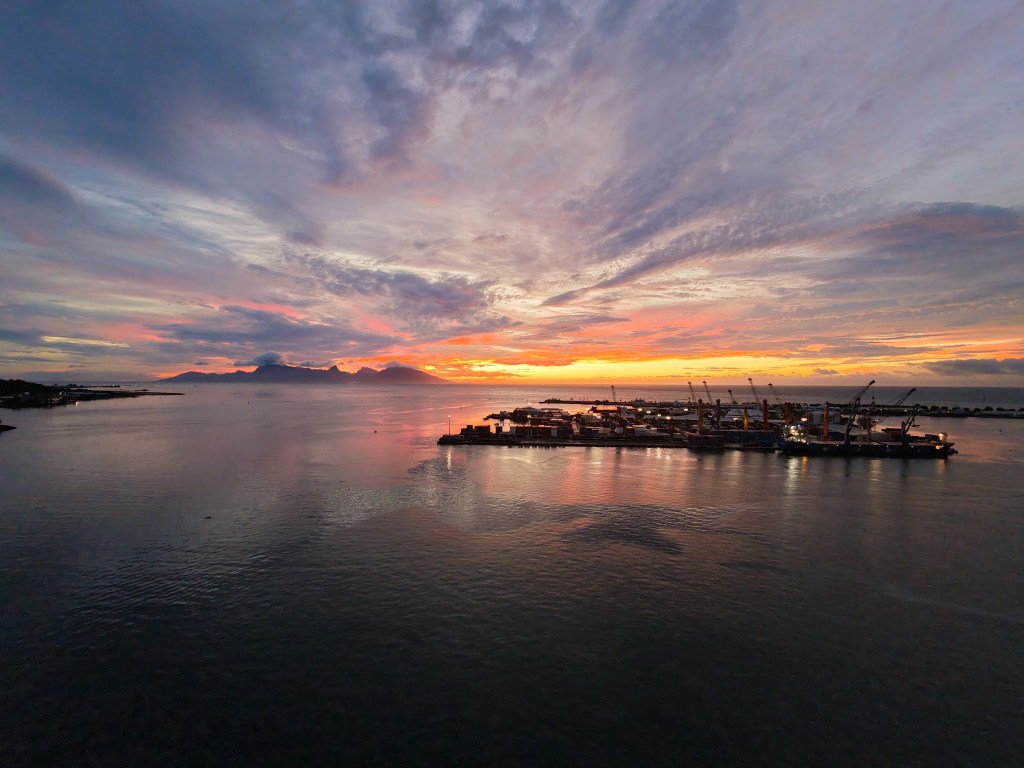
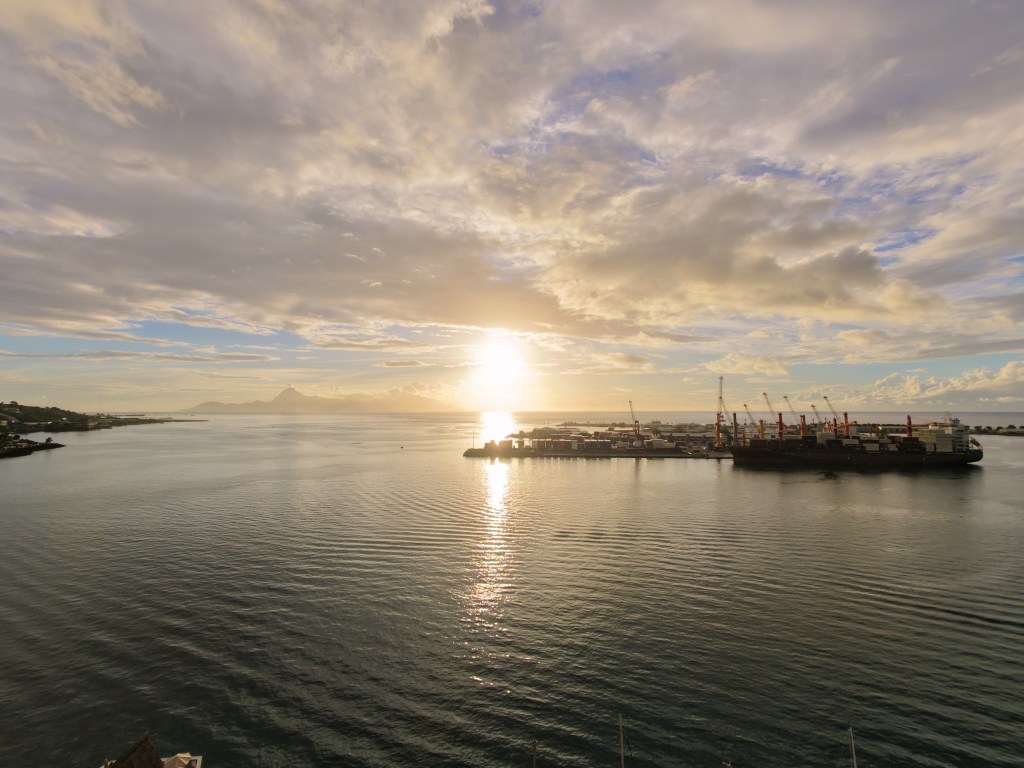
We spent a little over a week tied up on the outer dock at the Town Marina in Papeete, happily observing the chaos, noise and industrial ballet that comes with life in a commercial harbour. Cargo ships came and went, cranes beeped day and night, and crazy Superyachts dodged locals in their outrigger canoes. After months in remote islands, we fully embraced “town life” again: restaurants, cafés, ice cream… and the deeply traumatic process of reconnecting with civilisation.
Civilisation, as it turns out, is loud.
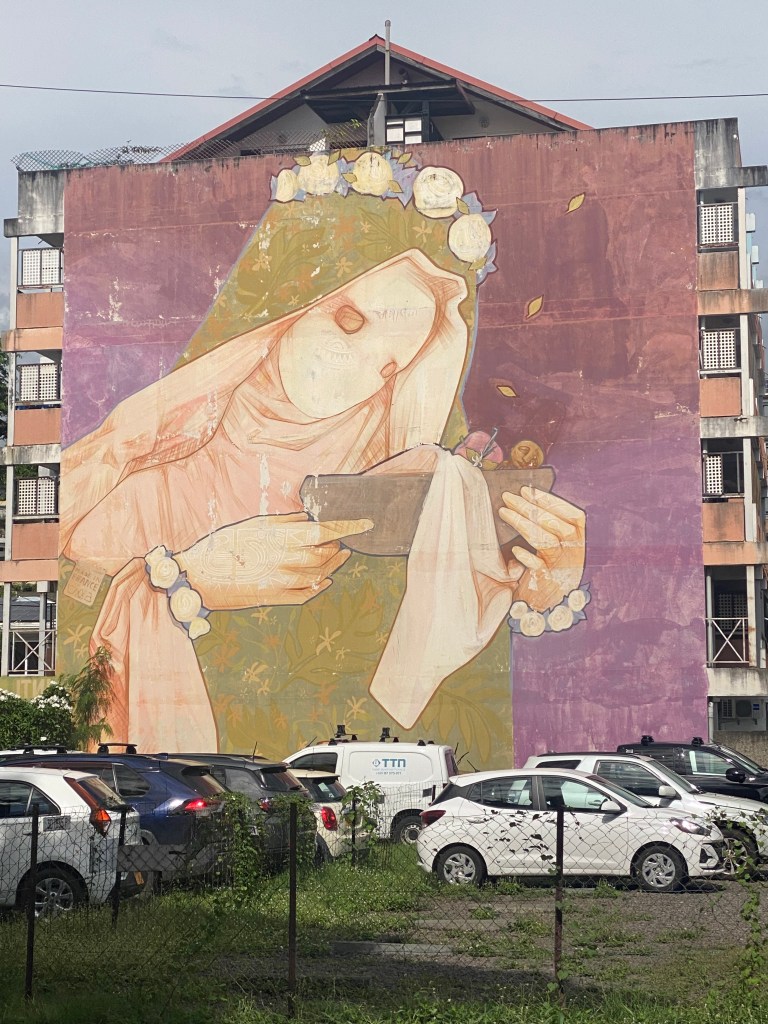
Papeete itself is… well… not exactly beautiful. About 130,000 people live here, while the roads seem to have been planned by someone confidently expecting maybe 14. Traffic is constant, many houses look slightly exhausted, and aesthetically the city mostly says: “We tried.” The parks are lovely though, and chickens continue to roam everywhere with the confidence of creatures that know humans are only temporary.
For me, Papeete is a strange place. Even though it is ridiculously far from Europe, it somehow feels more familiar than Panama City ever did. In parts it could easily pass for a town on the Spanish coast — like La Línea — if La Línea suddenly developed palm trees, tropical humidity and a poultry problem.
But the atmosphere is different. Polynesian culture still quietly shapes everyday life, people are genuinely friendly, and there seems to be a real effort to make sure even the poorest are not entirely abandoned. Public bathrooms are available — and astonishingly clean. (Seriously. Sailors notice these things. Some people judge cities by museums or architecture; cruisers judge them by supermarket quality and whether the public toilets require a hazmat suit.)
Sadly though, ice — crystal meth — has clearly changed parts of the town since we were last here 13 years ago. There’s still warmth and friendliness, but also a rougher edge now that wasn’t as visible before.
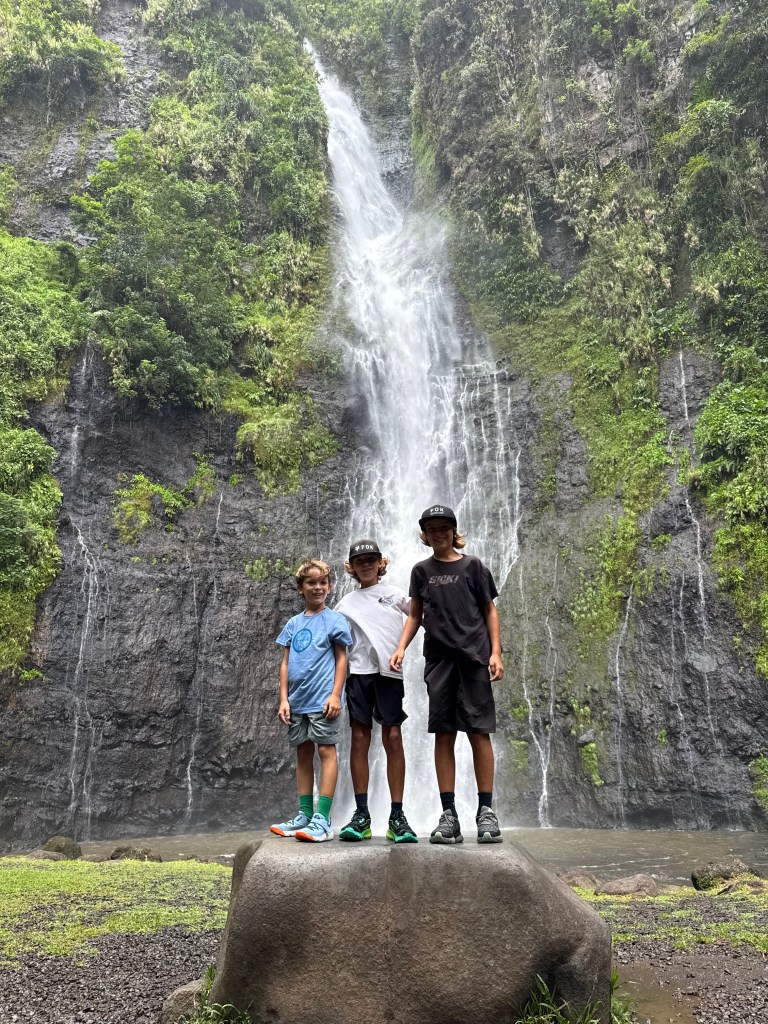
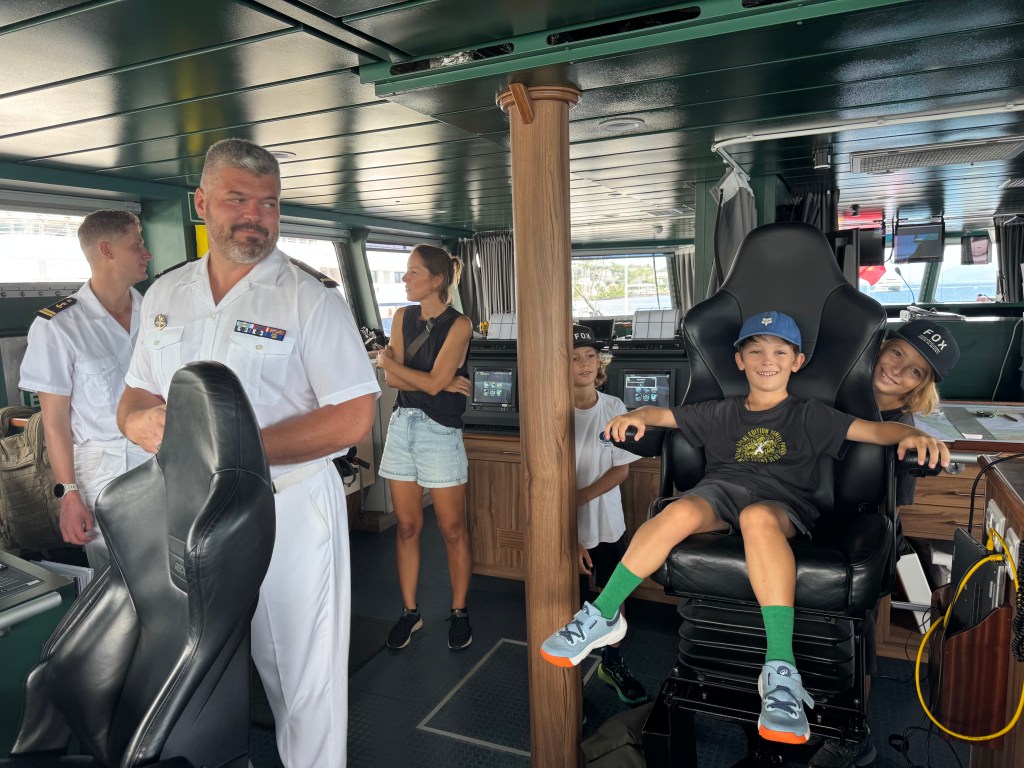
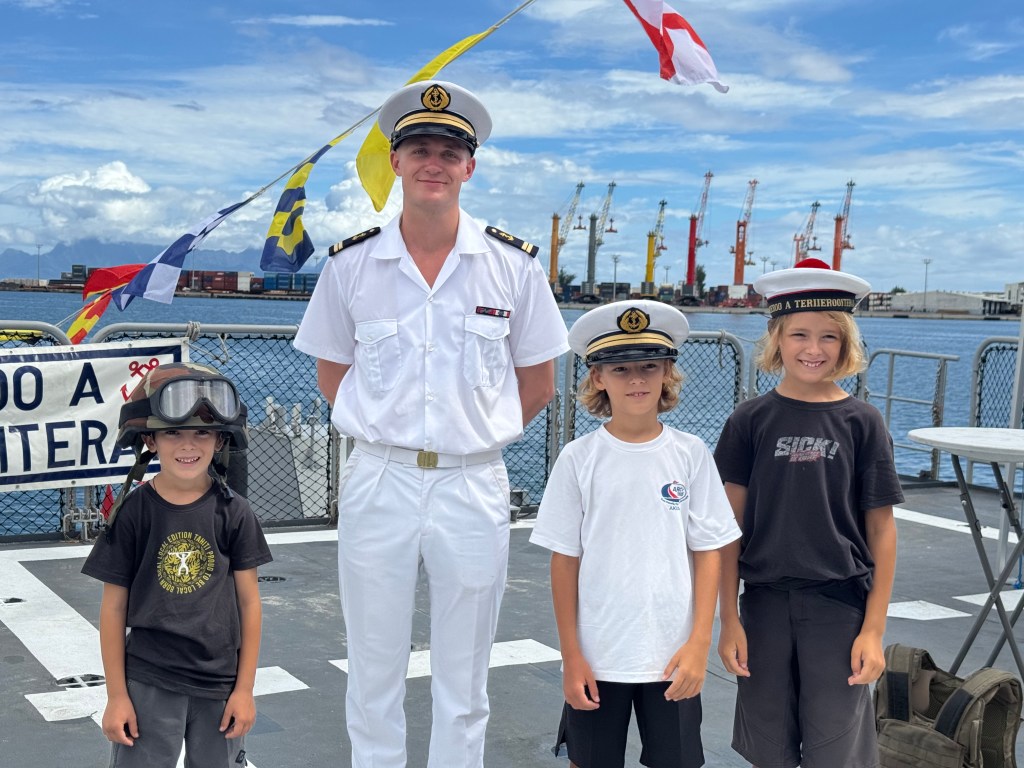
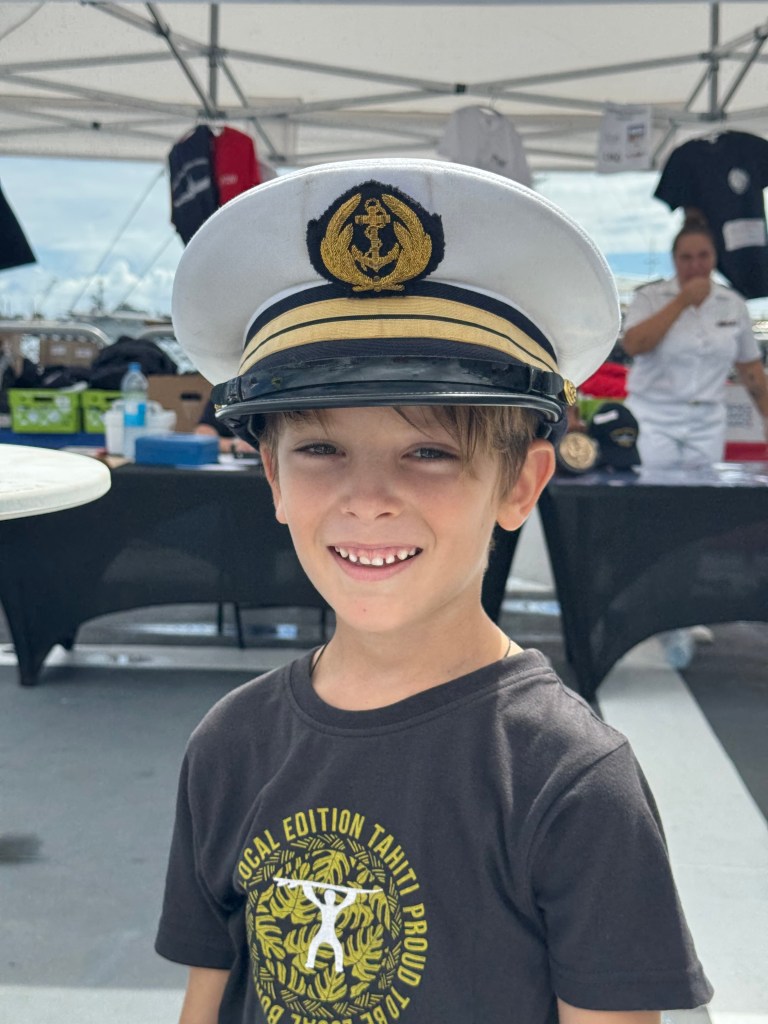
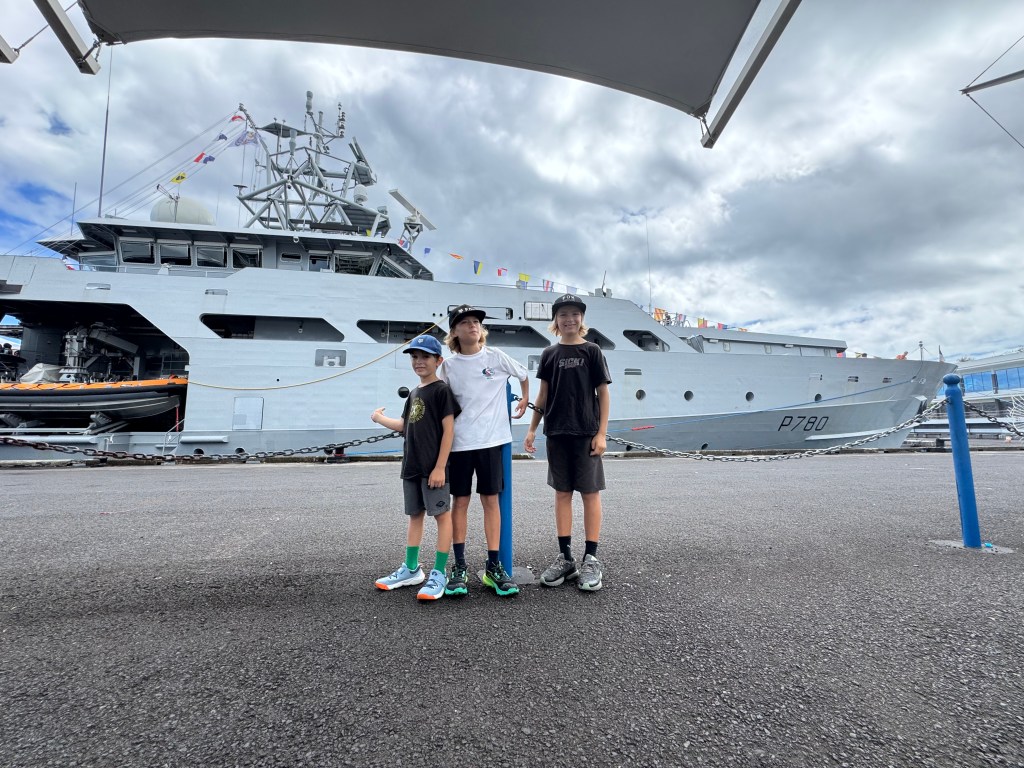
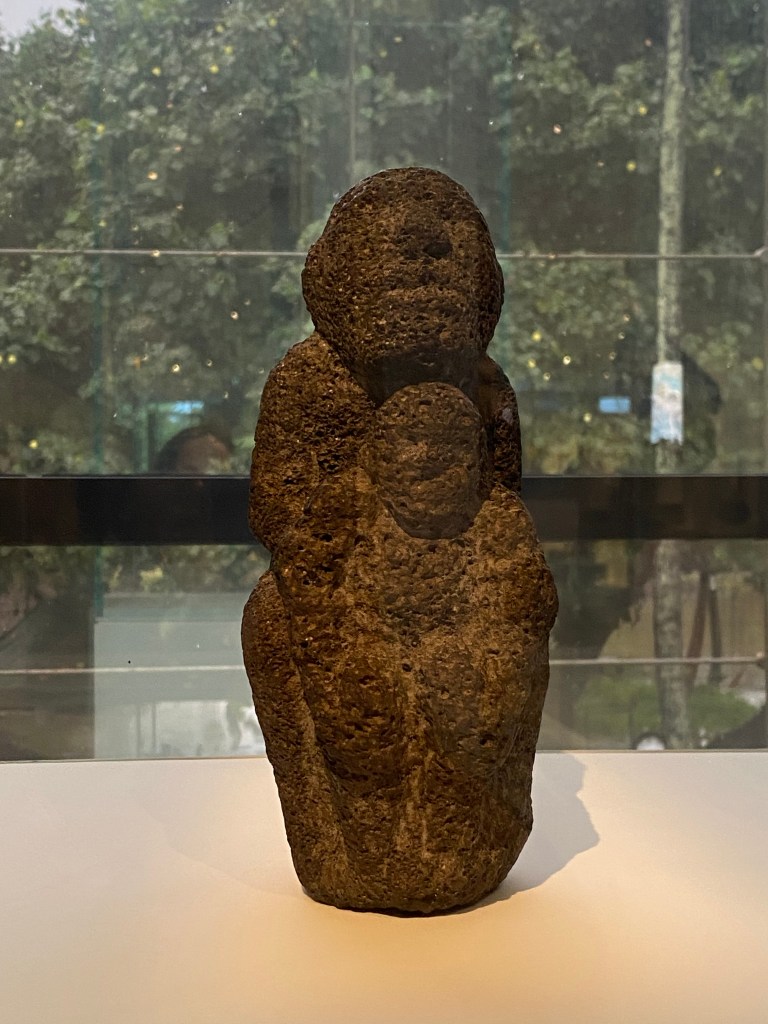
We rented a car and drove around the island, visited the Museum of Polynesian Culture — which Mark and I found fascinating while the three pirates experienced it as a prolonged hostage situation — and by pure luck we even got to tour a French Polynesian Navy warship during their one annual “come aboard and touch expensive military equipment” day.
Then the weather arrived.
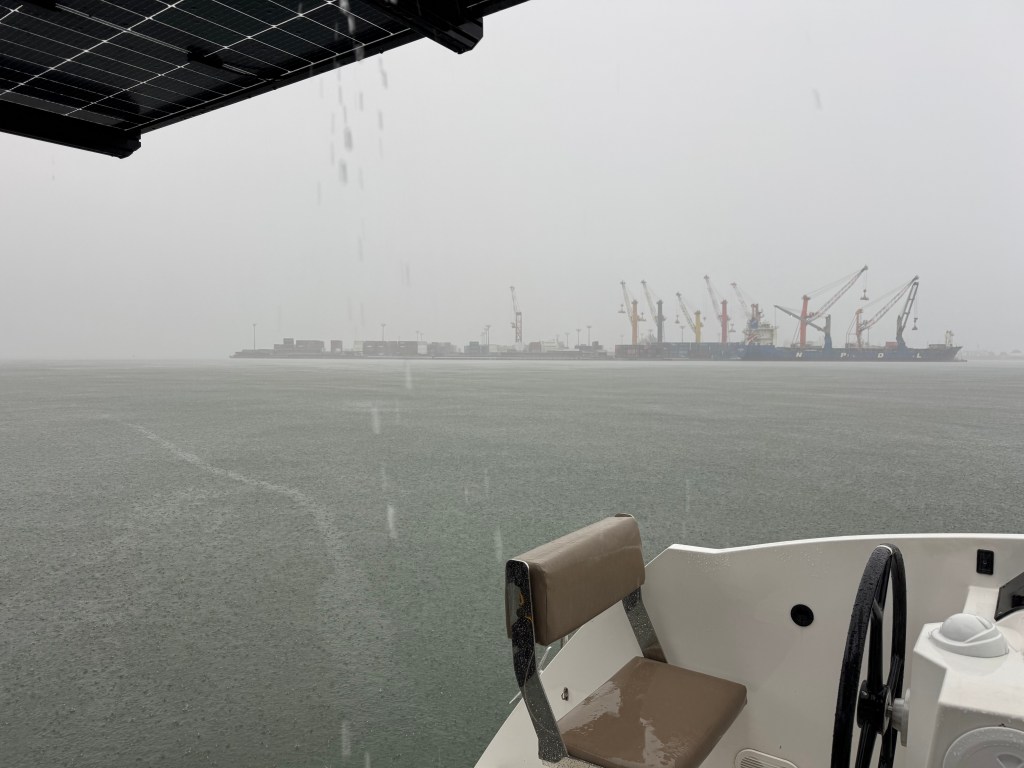
And by “weather,” I mean four straight days of biblical rain. Not tropical showers. Not drizzle. Proper “Have you checked whether the marina is still attached to the island?” rain. At one point I’m fairly certain fish were considering moving indoors.
So naturally we adapted to these terrible conditions with heroic resilience: provisioning runs to Carrefour, long lazy afternoons watching movies, excessive snacking, and me going for runs in wonderfully warm torrential rain while looking like a very determined drowned rat.
Honestly, after being remote for so long, Papeete felt like sensory overload. Supermarkets with actual choice! Traffic lights! Ice cream flavours beyond “coconut or no coconut”! It also made us realise just how absurdly remote places like Rikitea and Makemo really were. Out there, if you forgot to buy something, your next shopping opportunity was approximately “next geological era.” – Here in Papeete, meanwhile, we had somehow transitioned to: “Do we still have enough fresh mozzarella?”
It was also a wonderfully relaxing break — easy provisioning, not having to cook all the time, and simply enjoying life ashore for a bit. For me especially, it was perfect recovery time after my truly terrible cold.
Only a couple of days ago we sailed across to Moorea and dropped anchor in Opunohu Bay… and this place is absolutely spectacular. Towering green mountains, deep green water, dramatic jungle scenery — the kind of anchorage that makes you understand why people believed in Gods.
After a little exploring, I can already say this island is stunning beyond belief.
But more on Moorea in a few days — once we’ve properly explored it and the pirates have recovered from the shocking news that there may be additional cultural activities involved.


Leave a Reply